Slit Scan
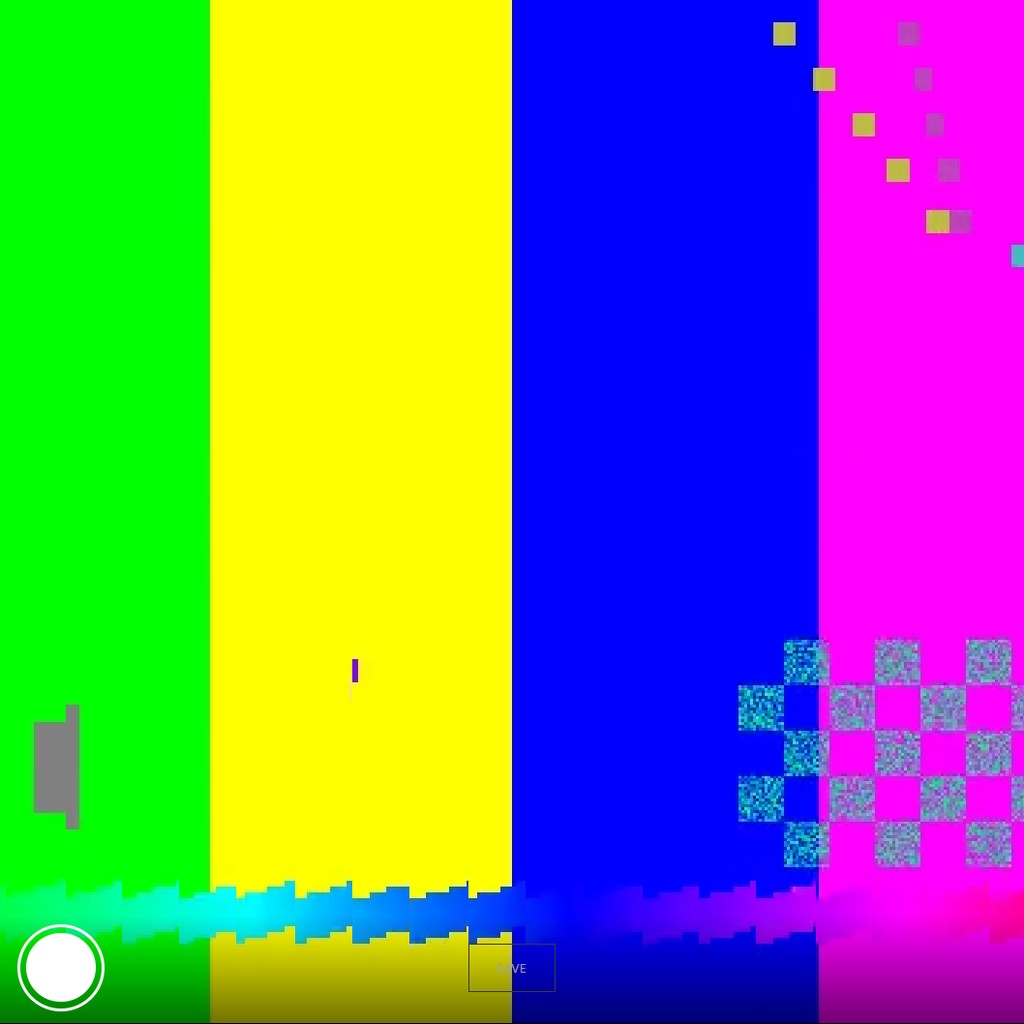
Slit-scan stores each live frame in a ring buffer. Along X or Y, every column (or row) samples a different past frame — a spatial delay ramp turns motion into the classic time-smear corridor. The Delay knob morphs between a uniform ramp and luminance-driven offsets, so bright areas can pull from a different moment than dark ones.
The same idea powered the Stargate sequence in 2001: A Space Odyssey (John Whitney / Douglas Trumbull), warp jumps in Star Trek: The Next Generation, and tesseract imagery in Interstellar.
Browser version: try it live in the browser — open Slit Scan demo
How it works
This page is a WebGL2 port of the Visio slit-scan / time-displacement effect:
- Push every source frame into a sampler2DArray ring (up to 128 layers).
- Along the chosen axis, map position (or luma) to a delay age.
- Sample that past layer at the same UV — one still holds many moments of motion.
- Resolution scales the source into the effect; Buffer sets how deep the smear goes.
Unlike pixel sort, this is not a permutation of pixels in one frame — it stretches time across space. Unlike datamosh, there is no motion-vector displacement field; the corridor is a deliberate delay ramp.
Use cases
- Time corridors — turn walking past the camera into a stretched hyperspace tunnel.
- Live AV / webcam — motion becomes architecture in real time.
- Cinema references — the classic Stargate / warp / tesseract look as a controllable browser tool.